Saturday, December 14, 2024

In the Heat of the Night

In the Heat of the Night is a movie that shows how racial segregation and tension were in the American South at the time it was made. Chief Gillespie and Detective Tibbs work together to solve the murder of Mr. Colbert, even though they initially disagree on race issues.

It's not clear what Chief Gillespie's relationship with Detective Tibbs is like. It's clear that Chief Gillespie is just as shocked as everyone else that he needs to depend on a black person to solve a case that he should be able to handle himself.


When they meet for the first time at the beginning of the movie, Chief Gillespie plans to convict Detective Gibbs of murder based on what his partner says happened. He didn't even have time to talk to or ask Gibbs before he found him guilty of murderous charges.

After he finds out who Gibbs really is, he changes how he feels about him completely. At first, he is unsure and acts like he doesn't trust Gibbs with what he says, denying the idea that he needs his help. Passively aggressively, he acts like he doesn't believe Gibbs in front of him but does behind his back, telling other people things like to get Gibbs whatever he needs or to make a choice just because Gibbs tells him to.


At the end of the movie, whether they were friends or not, they were at least polite to each other. Sometimes, Chief Gillespie didn't follow social rules and gave in to the pressure of having to act right when he was with someone of a different race.

At the end of the movie, this made me feel good because it gives me hope that acts like this, a team of black and white workers working together, are some of the first steps toward ending slavery. I believe in people because I know that not everyone will get on board with treating people differently for no reason, especially those who can help others.

This movie goes too far with the idea of "separate but equal" by putting together a white and a black person to work as a team, which wasn't common in the South at the time. By giving Tibbs a chance to work with him on a tough case, Chief Gillespie shows that African Americans of color can do good things for society.

There are two main women in the movie who play women: Mrs. Colbert and Delores Purdy. How each person is portrayed relies on how well-off and important they are in society.

The film shows two important women. One of them is Mrs. Colbert, who was married to the late Mr. Colbert. She is seen as a leader because she gets what she wants, which is justice for her dead husband. Chief Gillespie and Gibbs jump through a lot of hoops to solve the strange secret of Mr. Colby's death so that Mrs. Colby can be happy again.


Another woman in the movie is Delores Purdy, who is a Mamma Caleba who is having a hard time getting what she wants. Officer Sam Wood is in a relationship with her because she flirts and sleeps with other men. Because Wood was with Purdy the night of the murder, this exchange between them makes the police more suspicious.

The "separate but equal" saying was broken by the way women were treated based on their social standing at this time. At this point, women are admired and listened to more when they have more money and wealth.

Meeting Mr. Endicott face-to-face with Chief Gillespie and Tibbs at his successful farm is the most important part of the movie. What's important about Mr. Endicott crying after Tibbs approached him is that it shows how set the social order is at this time. It shows how strongly people at the time didn't want African Americans to have any rights or social standing.

In this case, Mr. Endicott can't believe that African Americans can do great things for society, like solve a murder case, and that they are the only ones making him rich because so many of them work on his farm.

This movie shows some of the problems with abortion and the Dobbs case. The movie shows that women have the right to have children, since Delores Purdy can have any guy she wants.

Throughout the movie, strong white men like Sam Wood, Harvey Oberst, and Ralph Henshaw use their rights, but at some point, white privilege can't keep someone from killing someone.

Officer Sam Wood is wrongly blamed for killing Mr. Colbert, even though he works for the sheriff's office. His strange behavior with Delores Purdy is a big reason why he is found guilty. That, along with being a lower-class citizen, makes people suspicious, which makes them seem not very fortunate to me.

Harvey Oberst is an unemployed white guy who was caught with Mr. Colbert's wallet and sentenced to jail time. I don't think this is very privileged, but it's more privileged than Tibbs was when he was sent to prison without a trial. In a similar way to Delores, he is not a well-off person in society, so it is not a surprise that he was found guilty because there was strong proof that he killed the woman.

Ralph Henshaw is a blue-collar worker, but that doesn't mean he isn't going to prison for murder.

It's clear from this that social class affects the rights and power people have in the town, just like white privilege does.

You can see how Chief Gillespie and Detective Tibbs work together to break down racial segregation and test the limits of "separate but equal" by seeing figures who are either less important or the same as Detective Tibbs.




Town Hall Reax

 At the Town Hall meeting, there was both fun and useful information shared. The lives of abolitionists and people who fought against slavery taught me a lot about American society. I did find it interesting that there weren't any reasons or supporters of slavery. This Town Hall meeting felt more like an anti-slavery gathering, where people shared their stories and talked about how they had worked their whole lives to end slavery.


A lot of the speakers talked about some kind of "Society," and many of them were founders. The Free African Society was started by Richard Allen. The Philadelphia Antislavery Society was co-founded by Lucretia Mott. The Fall River Antislavery Society was started by Elizabeth Buffum Chace. The New England Antislavery Society and the American Antislavery Society were both started by William Lloyd Garrison. I had never heard of societies and I didn't fully understand how important they were to the movement to end slavery. Even smaller groups of people lived in societies like the Female Antislavery Society, where Abby Keller Foster was the secretary, which was made up of only women. 


Reading and learning were very important in the fight to end slavery. For Black people who are free or have fled. When it comes to this, the story of Francis Ellen Watkins Harper is very strong. She was very sure that schooling was the best way to end slavery. She was born in Baltimore as a free woman and went on to become a poet and essayist. Some of her most famous lines are, "True equality is not divisible." People can't just get it and not get it from other people.Frederick Douglass's life is another great example of this type of attack. He was born into slavery but taught himself to read, fled, and went on to become one of the most famous and prolific speakers in the country.


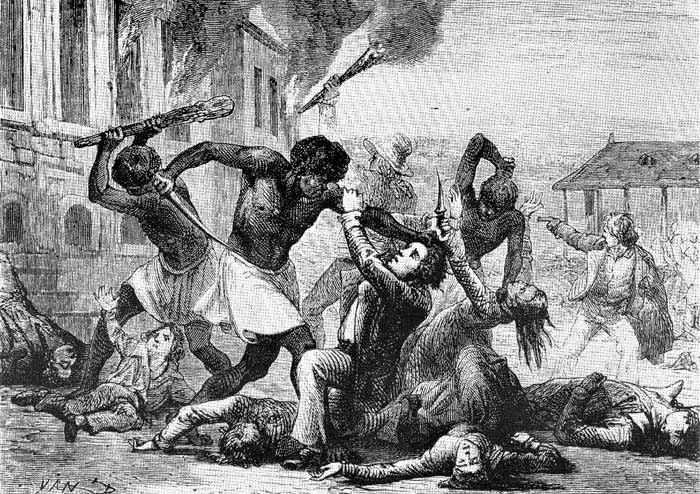
Even though many people chose to fight through education and writing books, some liked to be very direct and radical. Through their works, Nat Turner's Rebellion and John Brown's Bleeding Kansas, these two people show how violently people tried to end slavery. Even though one was a slave and the other was a free white man, they both thought they were sent by God to end slavery right away, no matter how violent it had to be. As their first act, they both killed slave owners. Nat Turner even killed the slave owner's family and children. They were both caught quickly and hanged to death, but they showed the country how violent the fight over slavery would become in the present.


Gone With the Wind

 Gone With the Wind is a movie about Scarlett Ohara's life. It shows how she lived on a farm and the terrible things that happened during the Civil War, as well as the problems she has with her love life.


The way the movie showed Southern life was one way it turned Southern life into a style. It is shown that Ohara's home is big and fancy, and it is in a nice part of the South. The clothes that Scarlet wears are much nicer than the clothes that Mammy and Prissy who are two African American slaves wore. This shows how nice Ohara's life is but it doesn't show how bad things were for slaves in the South.


The slaves were portrayed in the movie in a more stylized way than they were in real life at the time.

Mammy was shown to be a good slave who was also a good caretaker. She helps her owners and acts as a guide for them. She tells Scarlett what to do about how she feels about Ashley Wilkes, She tells her how to deal with the problem of chasing someone who doesn't want her. She tells her to think about her image and what might happen if she does something wrong.


When the war is over, Mammy stays the same by showing that she is a good caregiver. Scarlett has a lot to deal with now that the war is over. Because she lost her house and things are still going crazy she needs a guide, which is what Mammy is in this case. Mama tells her how to deal with the terrible event and reminds her how important family is. She isn't rude to Scarlett and her family because they lost their home and aren't living the beautiful life they had planned; instead, she backs Scarlett up.


To make up for it, I think the directors added some horrible things about the war to make up for the horrible things they left out about slavery.


The advice Scarlett got from her mother helped her become the person she is now that the war is over.


At the start of the movie, Scarlett acts like a typical Southerner she is selfish, doesn't care about other people, and is greedy. She doesn't care about anyone, sometimes not even herself, because she wants Ashley Wilkes to like her.

Her view on life changes as she gets used to her new life during and after the war. In the movie, Tara learns how to value her family and home. There are more important things in her life than a guy who doesn't want her. This makes her build a strong and healthy bond with Rhett.


All of these show that Scarlett, her family, and the slaves who worked for them have grown as people. The hard times she went through shaped these changes. She lost people she cared about and saw a war firsthand which changed her personality and ideals in big ways.


People will have different thoughts on how Rhett Butler should react to the war. People could think that his plan to make money off of the war was either smart or selfish. I think that his action of running a blockade to sell things shows how smart he is with money because it made him a lot of money. This also shows that he can turn a terrible disaster into something good, which some might see as an amazing way to show how smart he is.


When you watch this movie eighty years later, the idea of making money off of the war doesn't seem strange. We live in a time when this action would not be seen as silly. With technology getting better, especially since the movie was made so long ago, it is more common for people to try to make money off of terrible events like war. People today like to get attention or make money by sharing videos of terrible things happening, like wars. 

People's lives can change and they can learn new things about themselves because of the effects of war, as shown in the movie. The movie shows a real-life contrast between what drives people today and what drove people back when the movie was made. The people in the movie change directly over the course of the movie, and society as a whole changes a lot between the time the movie was made and now. 


Plessy v. Ferguson Reaction

 The case of Plessy v. Ferguson was heard in court today. It is a very important one for our country. Homer Plessy bought a first-class train ticket in New Orleans, Louisiana. He was of mixed race. Then, Plessy got on the car that was only for white people. This caused the police to report him, and he was jailed for allegedly acting badly. The Louisiana Separate Car Act of 1890 was then used to charge Plessy. We are now at the point where Judge John Howard Ferguson is accusing Homer Plessy of a crime for his acts in the state of Louisiana. Plessy's case will be heard by the US Supreme Court.


The lawyers for Plessy started their case by talking about the past of segregation in the United States and how it still affects our criminal justice system today. In 1896, the Jim Crow Laws were still being strictly followed in the United States, which is what their case was based on. "Why are we clinging to unjust regulations of the past?" was asked because of this argument. The Jim Crow Laws and the Black Codes, which had a lot of power over state and local governments, are examples of these unfair rules.

Plessy himself said that he wasn't really a black guy because most of his family and ancestors were white. He said that he was only one-eighth African American. But Plessy also said that man is the same, no matter what color their skin is, and it is only right that we see people for who they really are, no matter what color their skin is. Plessy's side used the Declaration of Independence to make a less personal case. They said that "all men are created equal" and have "certain unalienable rights." To support their case, the lawyers said that segregation was only based on race and that state laws were meant to separate the US and its towns based on race. This point of view brought up the separate but equal theory, which said that black people and white people were completely different and still weren't treated equally. For example, the brand-new, more expensive train cars are set aside for white people, while the much older, more worn-out cars are set aside for black people. Why should certain resources be given to one race over another when African Americans have worked hard to make the American economy work and segregation costs our economy a lot? The last thing Plessy's lawyers said was that more resources need to be given to African Americans to help them improve their lives so that everyone has a more level playing field.


On the other hand, Ferguson and his lawyers made a strong case in support of what the state of Louisiana did to Mr. Plessy. In their case, they stressed that the "separate but equal" principle, which applies to everyone, no matter what race they are, does not imply that one race is less important than another. The lawyers for Judge Ferguson said, "The state constitution is sound in general and should not be challenged." In effect, the argument was based on the idea that laws that were made in the past were always the same and couldn't be changed. Along with the "separate but equal" doctrine, another case was made that ending segregation was not the best thing for society at that time. This case didn't start segregation, which had been going on for years. There wasn't a big hole in American society or the business, so why fix something that isn't broken? African Americans have built strong neighborhoods like those in Galveston, Texas, even though they are segregated. This shows that it doesn't hurt either race.


The court heard arguments from both sides and chose to side with Mr. Plessy because it believed that Louisiana's forced separation was unfair to African Americans. The court made it clear that African Americans did not want direct equality with whites. Instead, they wanted better rights and living situations under the "separate but equal" doctrine. In light of this, there was no reason to change the long past of segregation in the United States, as the Ferguson side's argument explained. Just a case to change how state and local governments see and treat African Americans, which led to a decision in Mr. Plessy's favor.


Brown v Board mock trial

 Prior to the Brown v. Board of Education decision in 1954 racial segregation was a normal part of life in the US, especially in the South. Laws weren't the only thing that kept people separate; long-standing practices and social norms also did. A lot of white people in the south thought that these customs were important to keep their way of life safe. They often defended segregation by saying, "This is how we've always done it." They thought that keeping black and white people separate was natural and important for society. People of different races were kept apart in almost every part of life by laws like anti-miscegenation laws, which made it illegal for two people of different races to get married.

There were laws in the South that made it illegal for black and white people to marry. These laws were one of the main ways that segregation was enforced. Racism was seen as a threat to white people's racial purity, and these rules were made to keep things together. People thought that these rules were important to protect the white race and keep the system of segregation from changing. A lot of white southerners thought that these rules were part of the South's history and that they should stay in place to protect their way of life.

For many white people in the south, segregation wasn't just the law; it was how they lived their daily lives. People who supported division used the idea that "this is how we've always done it" as a strong reason. Race made schools, buses, eateries, and other public places separate. Black people had worse conditions and fewer chances than white people, but a lot of people thought that was how things should be. They said that segregation had been in place for a very long time and that changing it would mess up the South's natural order.

Many people found it hard to accept changes because they had a strong attachment to custom. People thought that segregation was normal and should stay in place because that was how things had always been. There were many people who thought that letting black and white people mix would make society very chaotic.


Trial 4 reax

 The case of Regents of the University of California v. Bakke was heard in court today. Lawyers for both sides presented their cases to the judges. Allan Bakke was a smart man who tried twice to get into the medical school at the University of California but was turned down both times. Because Bakke had a higher GPA than the sixteen blacks who got into the school, he sued because he was turned down.  First, the University of California's side. They used their Diversity Program. The University of California started this program to give minorities chances at the university that have been denied to them in the past because of our country's history of racism. Lawyers for the University of California said that a diverse student group should be in the government's interest because it would lead to progress in education, as shown by the Sickle Cell Disease programs of 1972. African Americans know things that have been kept secret for years that we can use to make the world a better place. The university said that these sixteen seats for African Americans are worth a lot more than one spot for a white person. The lawyers for the school ended their case by saying that America can't have just one way of running its job and education systems and must make sure that everyone has the same chances.

Now, Allan Bakke's lawyers used the Equal Protection Clause of the Fourteenth Amendment to make their case. This clause says that everyone, no matter what race they are, has the right to equal opportunities. There is a "tragic history of injustice" in our country, but Bakke's lawyers said that making more victims was not the answer to that problem. His lawyers said that Bakke was discriminated against because he was turned down because of the color of his skin. Because of a past of bias, minorities with less knowledge and intelligence are given jobs while the more qualified applicant is turned down for no reason he or she had anything to do with. One last point made in support of Allan Bakke was that his denial ignored the meaning of economic efficiency. If the University of California lets less qualified people into this great chance, they might not do as well as Mr. Bakke would have if he had been given the chance. This means that more money is spent to help these applicants in places where Mr. Bakke may not have needed help, wasting money. The court finally made up its mind after hearing both parts of the story. While this ruling said that the university's diversity program was legal, it also said that it needed to be changed. People from minority groups who can't get as much schooling and opportunities as white people should not be punished for something they can't change. But the stronger applicants shouldn't be punished because the university is trying to be diverse by choosing to reject the better applicants and accept the weaker ones. So, the case ends with a split decision that goes in favor of both the University of California and Mr. Bakke. This means that the university's application choice was changed. 


EOTO 4

 The lunch counter sit-ins were a major event in the Civil Rights Movement. They were a silent act of rebellion that became a strong symbol of resistance.


In 1960, four African American college students in Greensboro North Carolina, sat down at a Woolworth's store lunch counter that was only for white people. Their names were Ezell Blair Jr., David Richmond, Franklin McCain, and Joseph McNeil. They didn't come to make trouble. Their only wish was to be served. Even though they were polite, their protest got to the heart of how people are separated in public places.


You can't say enough good things about how important the sit-ins were. At its core, it was an act of honor. These students spoke out because they thought they should have the same space and be treated fairly as their white peers. Also, they wanted to get rid of laws that made Black Americans feel like second-class people. A peaceful protest quickly turned into a movement that young people all over the country joined. Thousands of them took part in a wave of peaceful direct action.


The sit-ins changed a lot of things.


In the first place, they showed how racism is strongly rooted in everyday institutions. These events took place in restaurants and department stores, among other places. When quiet Black students were turned away, hit, and told they were bad, it was a stark reminder of how cruel segregation was. It forced people to face the ugly facts of racism in a way that hadn't been possible before.


Two, the sit-ins gave kids a reason to get into fights. There were experienced civil rights leaders in this movement, but young people who were willing to put themselves in danger were also driving it. People laughed at them, beat them up, and arrested them. Still, brave students from all over the country were moved to join them. There were sit-ins like the ones they held in Nashville, Atlanta, and even Chicago. It showed that kids and teens who wanted to make the world a better place could also fight for human rights.

The sit-ins also showed how strong nonviolence can be as a way to make the world a better place. Some people yelled at and threatened the protesters, but they stayed cool and didn't get violent. Peaceful protests like these, which were sparked by people like Dr. Martin Luther King Jr., showed the world that respect and determination were much stronger than violence. People all over the country and the world learned about the fight for racial equality because of it. It changed the story of the Civil Rights Movement.


The sit-ins at the lunch counter also led to real changes, By the summer of 1961, there had been a lot of sit-ins all over the US. Because of these, many public places stopped being segregated. In the end, Woolworth's and other stores let Black people eat at their lunch tables. The sit-ins changed more than just the law. They also changed how people thought and felt. They made a culture of defiance that challenged the way things were and showed what could happen with peaceful protest.


In the Heat of the Night

In the Heat of the Night is a movie that shows how racial segregation and tension were in the American South at the time it was made. Chief ...